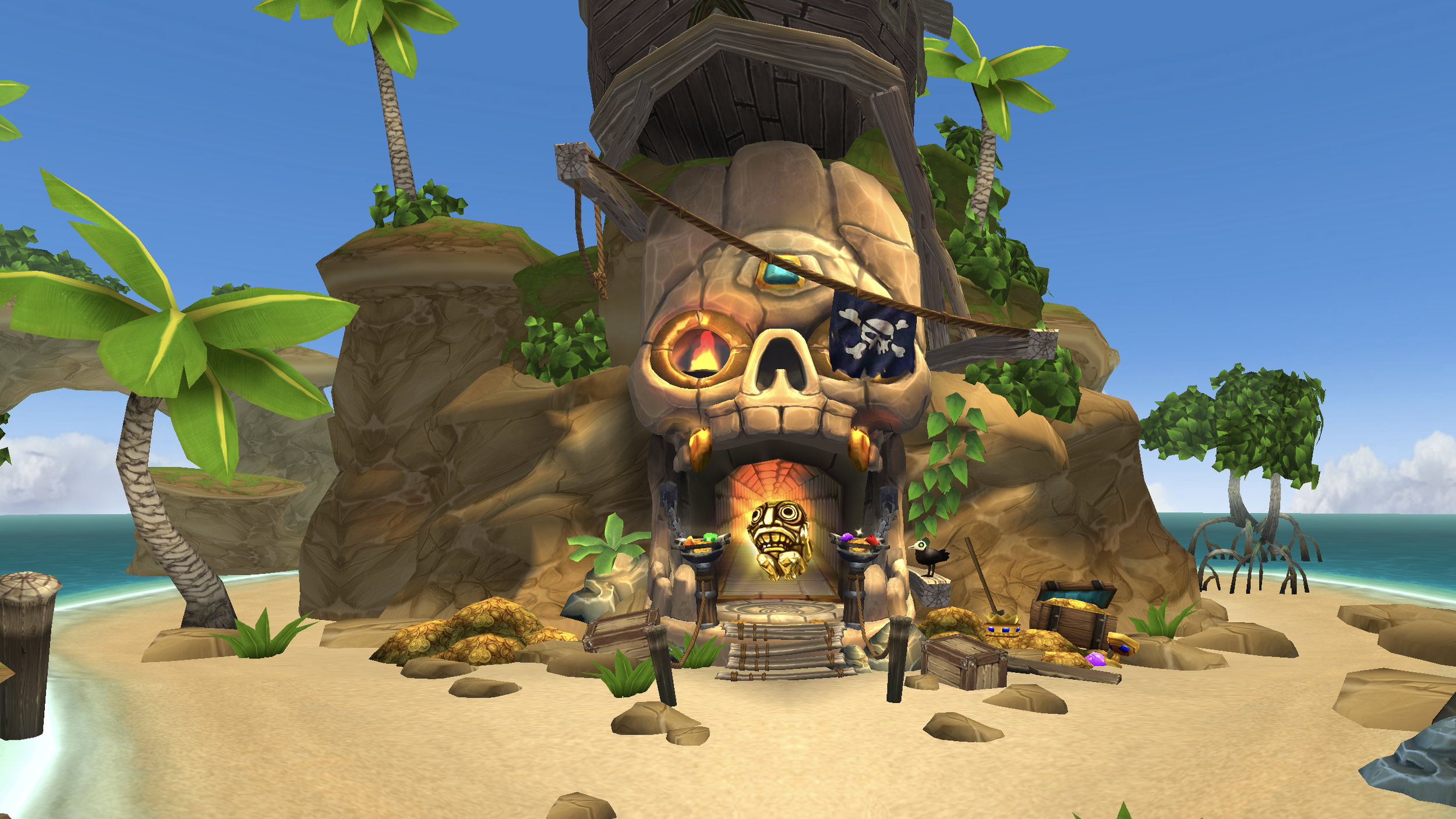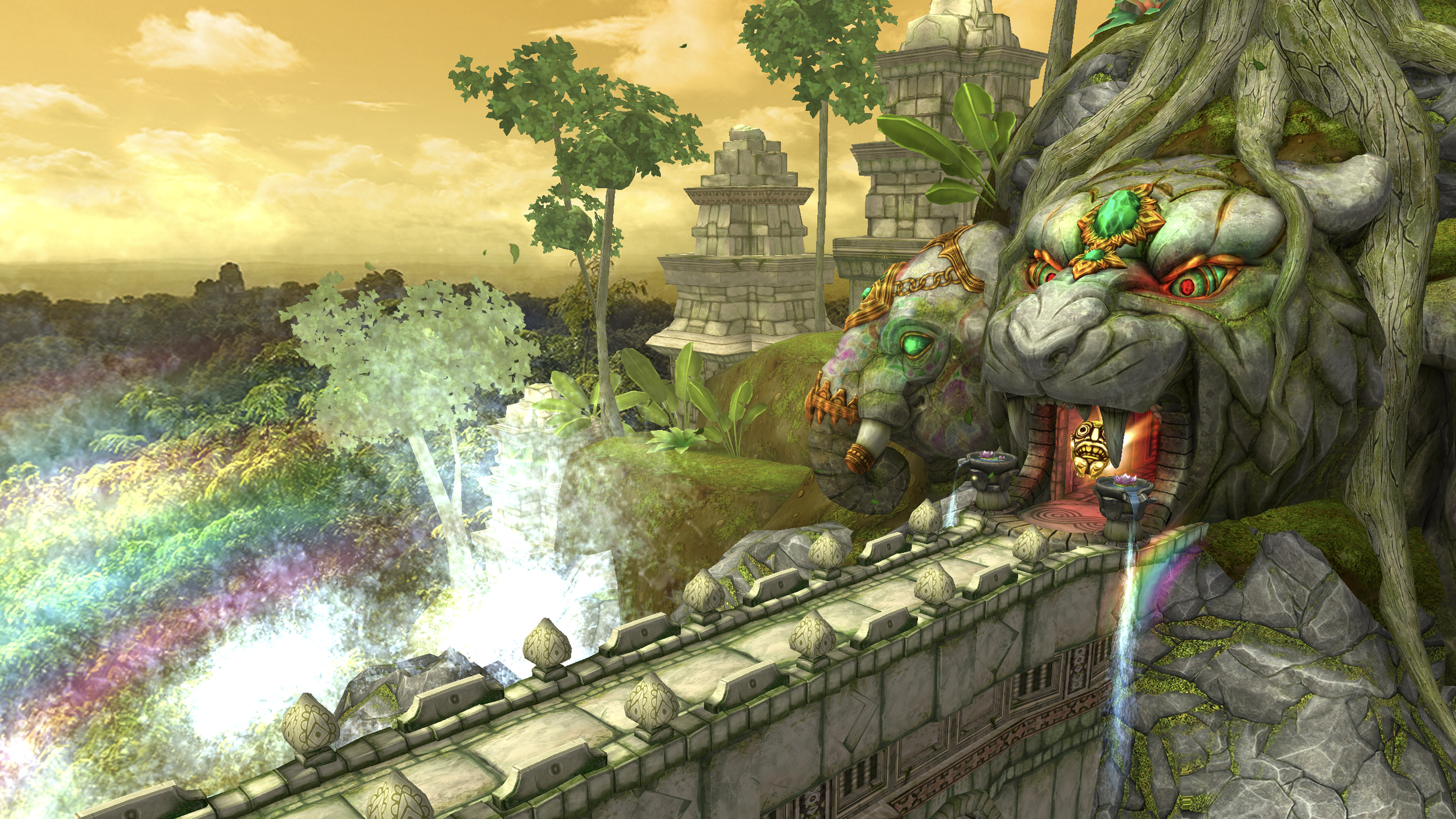
Between 2015 and 2022, I worked as the Lead Environment Arist, Lead Artist, and Art Manager for Temple Run 2. During my time on the project, I worked on every new environment taking each one from ideation to release, including concepting, budgeting, planning, creation, polish, and marketing. I created the art pipeline, and led a team of artists through new map and Live Ops holiday map creation.
What Did I Do: Concepts, environment art, texturing, track design and setup, environment animations, VFX, planning, documentation, art direction
What I Didn’t Do: Characters, character animations
When I joined Imangi Studios in 2015, my task was to figure out how to expand Temple Run 2’s environments beyond the original map. That meant creating a repeatable LiveOps pipeline from scratch, working with engineers and artists to plan, create, and implement tools and art focusing on repeatable workflows. In total, I worked on 13 unique environments and reskins during my time on the project. The role allowed me to grow in every area. As an art generalist, I handled everything from environment art to animation, concept art to VFX. As a team leader, I provided production expertise, team management and growth, and periodically filled in as art director.
Each map in Temple Run 2 was a self-contained experience featuring unique challenges. They spanned 4 to 8 themed zones to create a varied world and provide the foundation for gameplay. My work on the game involved creation of environment art assets ranging from the iconic temple openings to challenging obstacles. Generally, the environment team consisted of myself and 2 other artists working together to create a cohesive experience. I divided responsibilities to the team. While each artist was primarily responsible for at least one zone within a region, I planned asset list to regulate the scope, focusing on textures and model reuse where possible while still ensuring each zone had a unique look. For example, I planned texture atlas usage to ensure we avoided creating overlapping or unused textures, as regardless of how many zones a region had we restricted all environment art to a single 4096×4096 texture atlas. I ensured art style remained consistent from region to region, zone to zone.
Performance was a critical factor to Temple Run 2’s success. Due to the lightweight art style and the tight optimization guidelines I set, we were able to ship the same game globally while avoiding performance issues in countries where high-end phones were inaccessible or generations behind what was available in the US. Through creative use of vertex colors, baked lighting, and meshes optimized for batching (especially important in earlier versions of Unity before the URP existed), we kept draw calls low and avoided memory issues that would have otherwise caused device overheating or frame drops.
I also developed holiday or event-themed versions of the maps for events like Halloween, Earth Day, Lunar New Year, and Yule, which garnered repeated featuring in the Apple App Store and Google Play Store. I closely monitored App size to ensure each update was downloadable without requiring Wi-fi, ensuring our players could access content anywhere. Each update took between 2 and 5 months to develop, depending on its scope.